
Moore County Court Record Requests
Go to the office that owns the record. The Moore County District Clerk holds the District Court civil, family, and felony file. The same office serves the County Court at Law for its statutory family docket. The Moore County Clerk keeps probate, guardianship, and constitutional county-court records. Municipal and justice courts keep their own files. Order a transcript from the court reporter, not from either clerk.
Online lookup starts with the county-linked LGS system. Guest Login shows index data only. To buy available images, you must register first. re:SearchTX offers a second statewide route when Moore County material appears there. You can also visit the counter, call, fax, or mail a written request. A clerk web inquiry form works too. That form asks for a name, email, reason, optional phone, and a reCAPTCHA. Include the court, case number or style, date range, and exact document. Add your copy type and delivery choice.
- Identify the court and record type before searching a name.
- Use LGS for the index and available images, or test re:SearchTX as a statewide fallback.
- Call, visit, fax, mail, or submit the clerk inquiry when the record is absent online.
- Ask for a docket sheet, named filing, plain copy, certified copy, exemplified copy, or transcript.
- Confirm the current fee, payment method, delivery method, access proof, and completion date.
Room 107 or Room 109?
Two clerk counters share the courthouse. Each handles different Moore County court records. County Clerk Brenda McKanna sits in Room 107 at 715 S Dumas Avenue, Dumas, Texas 79029. Reach that office at 806-935-2009 or 806-935-6164, with fax 806-935-9004. District Clerk Mayra Rivero works from Room 109 in the same building. Her number is 806-935-4218, fax 806-935-6325. District Clerk hours run Monday through Thursday, 8:30 a.m. to 5 p.m. Friday hours are 8:30 a.m. to noon.
The official Moore County courthouse page makes clear why the court matters before the walk. County, County Court at Law, and district functions each sit in separate rooms of the building. Ask for something specific, like a public index, a filed document, or a certification. An open-ended investigation is not what the counter does. The county's clerk pages point to the two record offices. Those offices sit behind Moore County court case records.
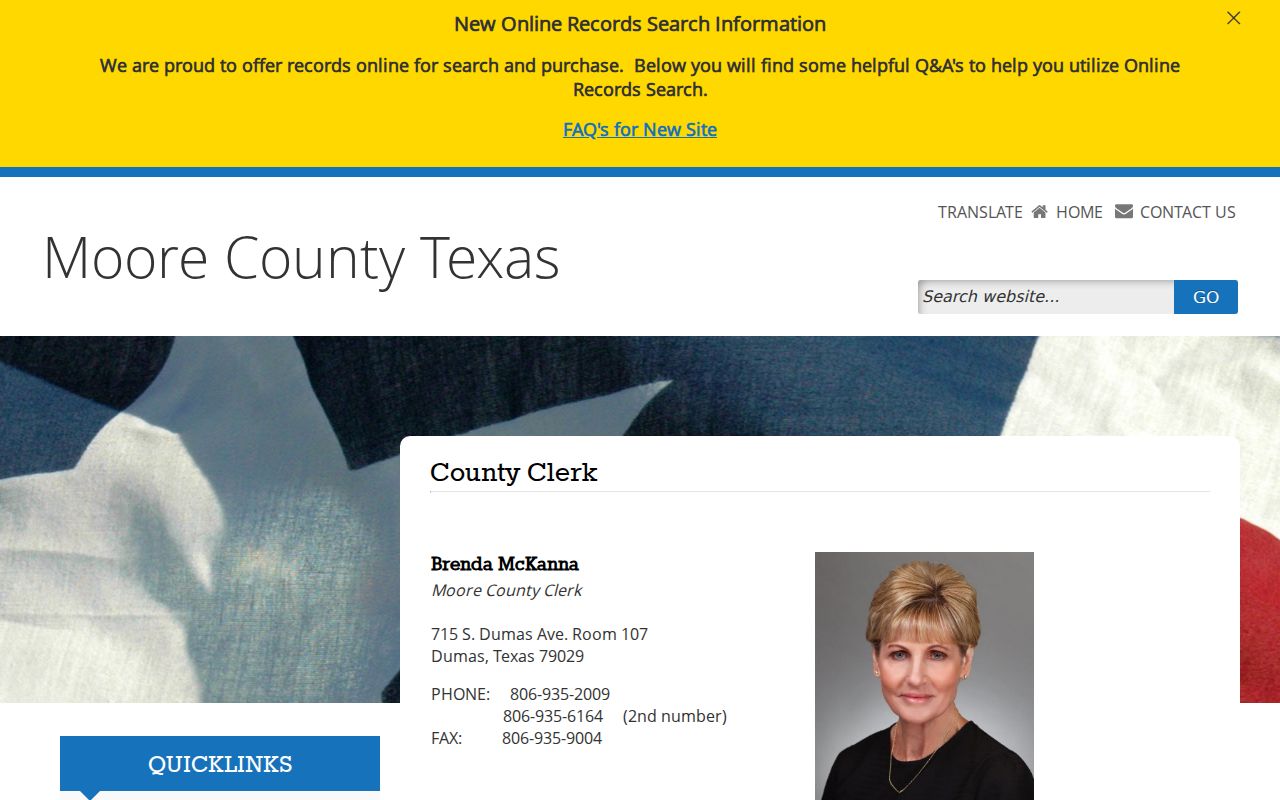
The display marks the County Clerk route for county, probate, and guardianship files, while the District Clerk page posts its online-records notice and contact details.
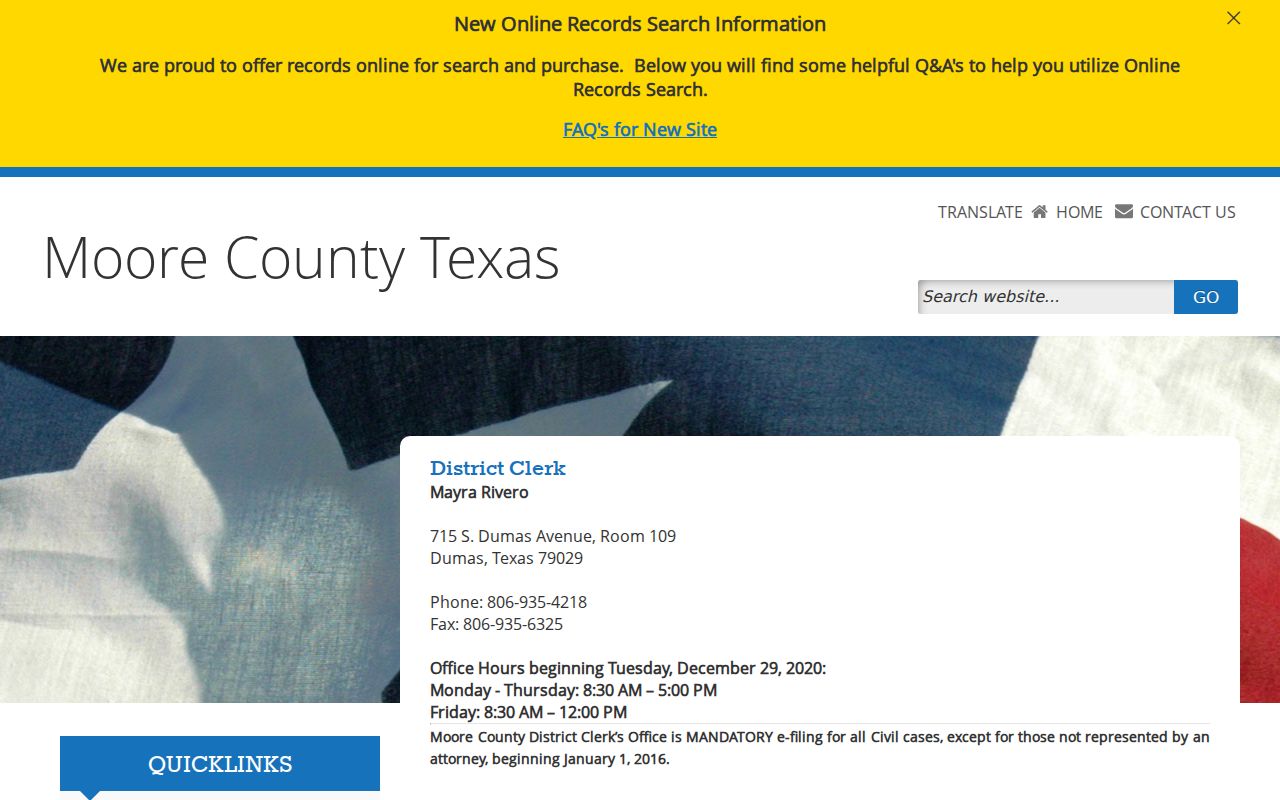
That office is the custodian for district civil, family, and felony case files.
Kinds of Moore Court Records
A docket is the event index. The filed document is the real pleading, order, or judgment behind that entry. A certified copy carries the clerk's authentication, which a plain purchase does not. Know which product you need before you buy. Moore County court case records can include:
- docket sheets and chronological case indexes;
- petitions, answers, motions, notices, and returns;
- signed orders, judgments, pleas, and dispositions;
- public civil, family, felony, probate, and guardianship material; and
- audio or transcripts ordered from the responsible reporter when available.
Not everything shows up online. Exhibits may sit outside an image set, and sealed items, protected identifiers, juvenile material, and expunged records can be withheld or redacted. So a missing image does not mean the clerk lacks the filing.
Moore LGS Images and Index
The official LGS records system splits free index viewing from image purchases. After entering as a guest or registered user, you pick an office and record type. The county FAQ names Criminal, Civil, Probate, and Property. "More Information" opens case detail; "Images" leads to previews and purchase options when offered.
Guests cannot buy full images. Registration unlocks that layer. Per the FAQ, you can view up to five images before a subscription. Each purchase carries a $0.30 transaction fee. The subscription price varies. View Purchases and View Receipts track what you have bought. The portal does not publish its freshness, oldest online year, or historic coverage. The official LGS landing interface is the Moore County court record search route.
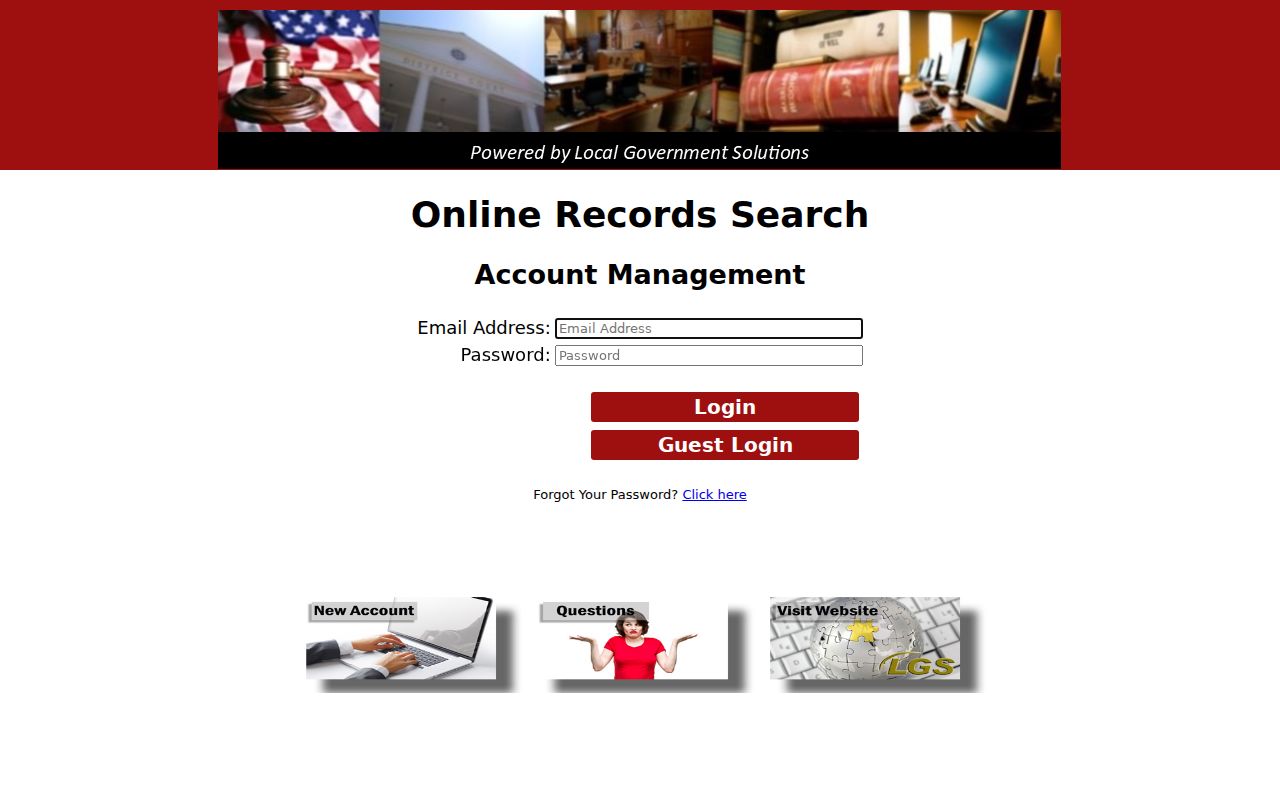
Treat the interface as a starting index. The clerk still issues the authenticated copy. One more thing: an empty online result never proves no Moore County court record exists.
Court Records: What They Contain
Read a Moore County court record as connected parts. The docket gives the sequence of events. The file holds the words of each filing. A signed order beats a short portal label, and confirm any current setting, since continuances and resets can move the date.
| Case identity | Case number, court, style, parties, and filing date. |
|---|---|
| Pleadings | Petitions, complaints, answers, motions, responses, and notices. |
| Orders & judgments | Signed rulings and final or interim decisions. |
| Docket sheet | A dated chronology of filings, settings, service, and dispositions. |
| Access status | Public, redacted, restricted, sealed, or unavailable online. |
The Reporter Keeps Transcripts
Case papers and transcripts have different keepers. Clerk certification covers filings. The court reporter controls the transcript. Court Reporter Shelly Burnett serves at the county courthouse through the District Court number, 806-935-2700. Ask her about availability, format, cost, and completion time, since those terms are not published. A docket entry can note that testimony or a hearing occurred without reproducing the testimony. A filed order likewise states the result, not the word-for-word record. When requesting a transcript, give the proceeding date, court, case number, and the portion you need.
Copy Fees and Certification
A plain copy just reproduces a public document. A certified copy adds the clerk's authentication. An exemplified copy carries a higher form of authentication, used when the receiving body demands it. Say which product you want before paying. Moore County does not post its plain-page, certification, exemplification, docket-sheet, or search fees, so the responsible clerk has to quote them.
| Item | Amount |
|---|---|
| LGS index | Free for Guest Login |
| LGS image transaction | $0.30 per purchase, plus image cost |
| Plain or certified clerk copy | Confirm current charge |
| Transcript | Quote from court reporter |
The County Clerk's fee schedules dated January 1, 2026 cover filing and issuance amounts. A civil suit totals $336, while a base probate or guardianship filing runs $360. Those figures are filing costs, not certified-copy prices. So don't quote a filing total when you ask what a Moore County court record copy costs.
Older Moore County Case Files
The clerk's pages leave many practical details unstated. No oldest online year is given. There is no word on archives, microfilm, or how long an older file takes to pull. Start with LGS, then call the right Moore County clerk. Give staff a narrow date range plus the court, party names, case type, and any case number you know. Ask whether the file sits in paper or has been imaged. Also ask whether it is stored offsite or restricted.
The County Clerk also sets a firm boundary. The office is not required to run searches that statutes do not authorize. It cannot guarantee that records are correct. So identify a specific record rather than asking staff to research a person broadly. If the clerk cannot release an item, ask for the controlling rule. Ask too about any authorized-requester or court-order route.
Online Images Versus Certified Records
An LGS image is a handy electronic copy, nothing more. Paying to download one does not make it certified. When a court or agency needs proof a document is authentic, give the Moore County clerk the case and document details. Ask for a certified copy instead.
The gap matters most when the online set looks thin. A bundle of images may leave out sealed pages, protected identifiers, or exhibits. A filing may never have gone online at all. Check with the clerk first. Do not treat your download as the whole Moore County court case file. And if the recipient wants a higher form, ask whether an exemplified copy exists. Then ask what authentication it expects.
Access Rules for Court Records
Texas presumes access to many court records. Still, the Texas Public Information Act is not a blanket key to every case file. Judicial records follow Texas Rule of Judicial Administration 12 in part, and filed case records also answer to court rules, statutes, and orders. Personal identifiers may be redacted. Sealed, expunged, and juvenile material face separate limits.
Key rules:
Texas judicial-record access policy explains the Rule 12 route for judicial records.
Texas court rules and case-specific orders can require redaction or sealing.
Family Code Chapter 58 restricts juvenile justice information, and expunction removes qualifying criminal records through its own legal process.
There may be a second search route. The statewide re:SearchTX interface exists for case lookups, though it does not promise public access or Moore County coverage.
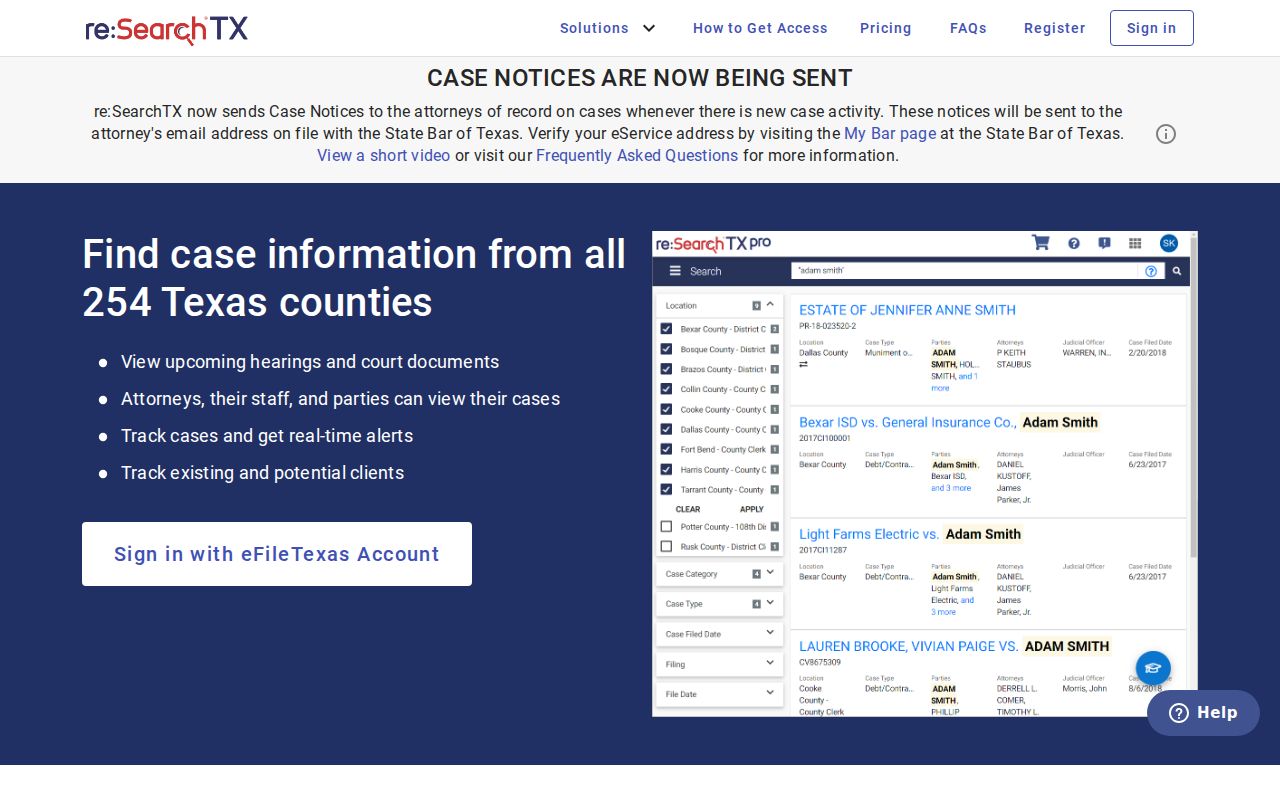
That official page documents the statewide route and its access gap, not guaranteed local coverage.