
Moore County Court Docket Searches
For a Moore County case lookup online, start with the LGS Online Records Search. A free Guest Login reaches the index data, according to the county FAQ. Want images of eligible public filings? That takes registration and a purchase. Start by picking an office and a record type. Options include Criminal, Civil, Probate, or Property. The filters you get depend on that choice.
Before searching a Moore County court docket, have the cause number handy. A party name, court, case type, and filing year also help. The county does not publish the post-login filters or wildcard rules. So avoid guessing at a cause-number format.
- Open LGS and choose Guest Login for the index.
- Select the Moore office and matching record type.
- Use the available filters, starting with a known cause number.
- Open “More Information” for index detail and “Images” only when offered.
- Confirm settings and request certified copies from the record-owning clerk.
Moore LGS Index and Images
The official LGS interface is the gateway for a Moore County docket search. It is not proof that every case sits online.
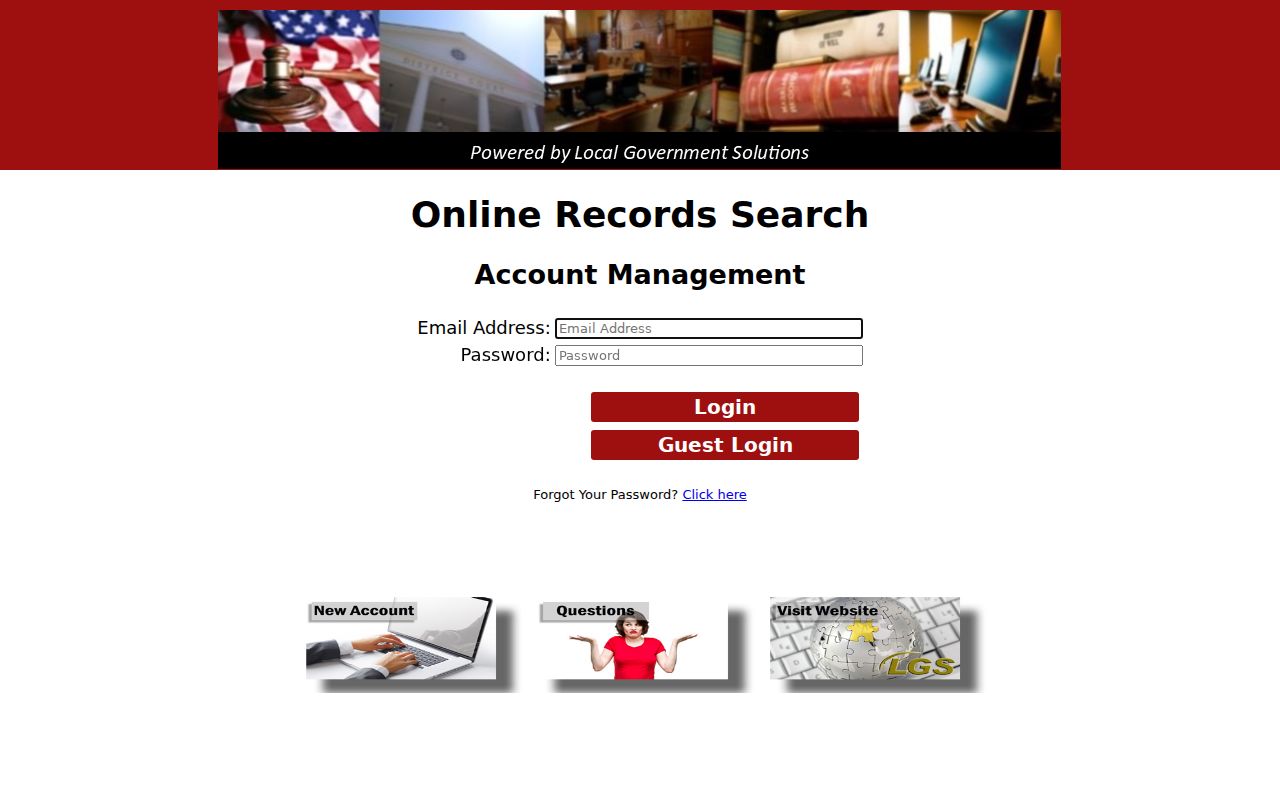
Guest access gets you the free index. Registered users can buy images where the record allows it. A new account may purchase up to five images before a subscription kicks in. Each purchase carries a listed $0.30 transaction fee. Subscription pricing varies. Know what you are buying. An index, a paid image, and a clerk-certified copy are three different products.
| Layer | Use | Limit |
|---|---|---|
| Guest | View free index data | No image purchase |
| Registered | Buy eligible images | Public images only |
| Clerk | Order plain or certified copy | Confirm fee and delivery |
Court Dockets: What They Show
Think of a court docket as a case's chronological index. It can show the court, the parties, the filing date, events, settings, and disposition. But it is not the full case file. A line naming an order does not reproduce the signed order. A portal image is not automatically certified.
| Cause number | The court’s file identifier; copy it exactly because Moore’s public format was not confirmed. |
|---|---|
| Style and parties | The caption and roles, subject to redaction. |
| Docket entries | Pleadings, service, motions, notices, settings, orders, and later events. |
| Setting | A scheduled event, not a judgment or conviction. |
| Disposition | The event or signed ruling resolving all or part of the case. |
Read docket entries in order, and read them carefully. "Filed" means received, not granted. A reset changes a date; it does not dismiss the matter. When the terms of a document matter, ask for the signed version itself.
Moore Clerk Rooms Matter
The official county home page supplies courthouse and department navigation.
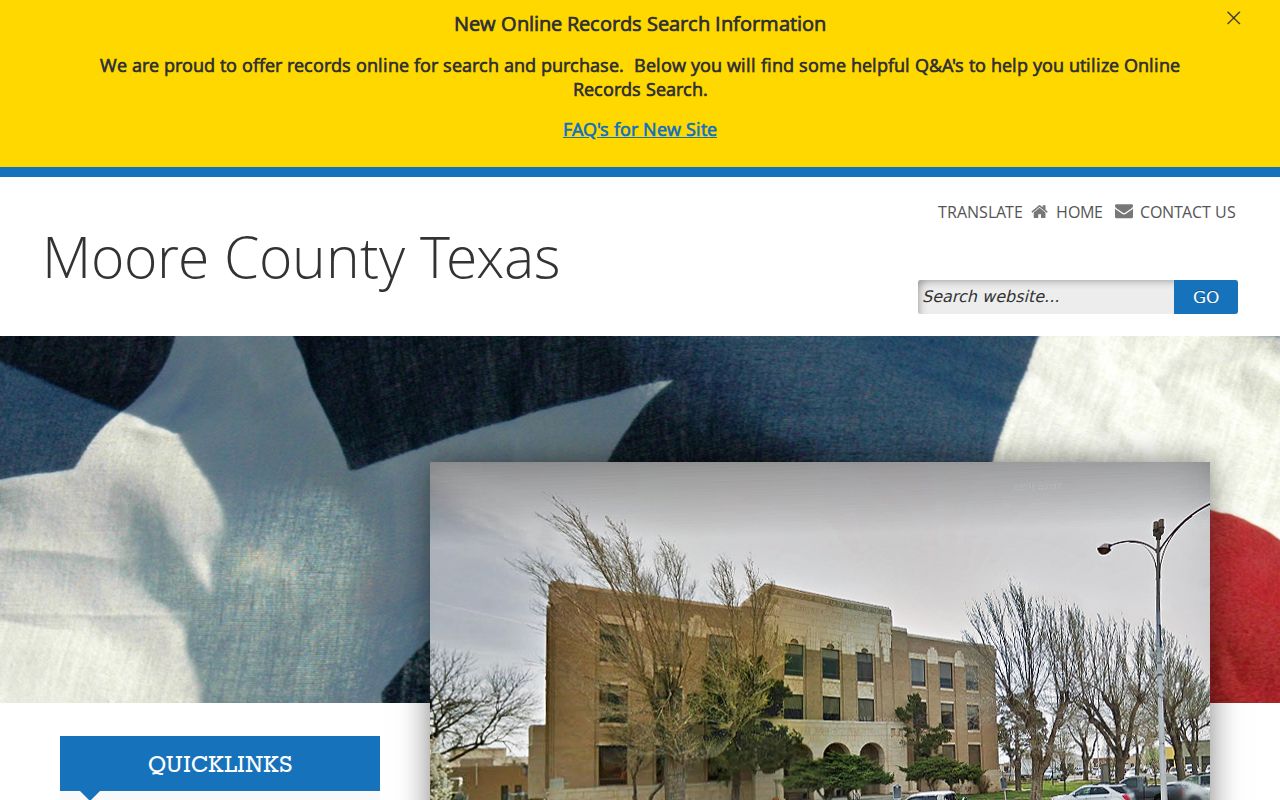
The building at 715 S Dumas Avenue splits its clerk duties by room. County Clerk business, covering constitutional county, probate, and guardianship records, runs through Room 107. District Clerk records, meaning district civil, family, and felony files, run through Room 109. County Court at Law settings use Room 206. District Court administration uses Room 302. Several separate dockets share one address.
Start with the court, not the person’s name. Choose the venue and record type before searching.
Moore County Courts and Their Dockets
Texas sorts cases by subject, offense level, amount, and venue. A family matter may land in District Court or County Court at Law, since the statutory court holds concurrent family jurisdiction.
| Court | Docket covers | Search route |
|---|---|---|
| 69th District Court | Felonies, major civil, district family, land and title | District Clerk and LGS |
| County Court at Law | Statutory county and concurrent family matters | District Clerk or coordinator |
| Constitutional County Court | Assigned county criminal and probate work | County Clerk |
| JP1 and JP2 | Small claims, evictions, fine-only criminal and traffic | Precinct clerk |
| Municipal courts | City ordinances and fine-only state offenses | City clerk or portal |
Ordinary appeals, when applicable, go to the Seventh Court of Appeals in Amarillo. Federal cases belong to the federal Amarillo Division and PACER, not to a Moore County docket.
Moore Court Docket Custodians
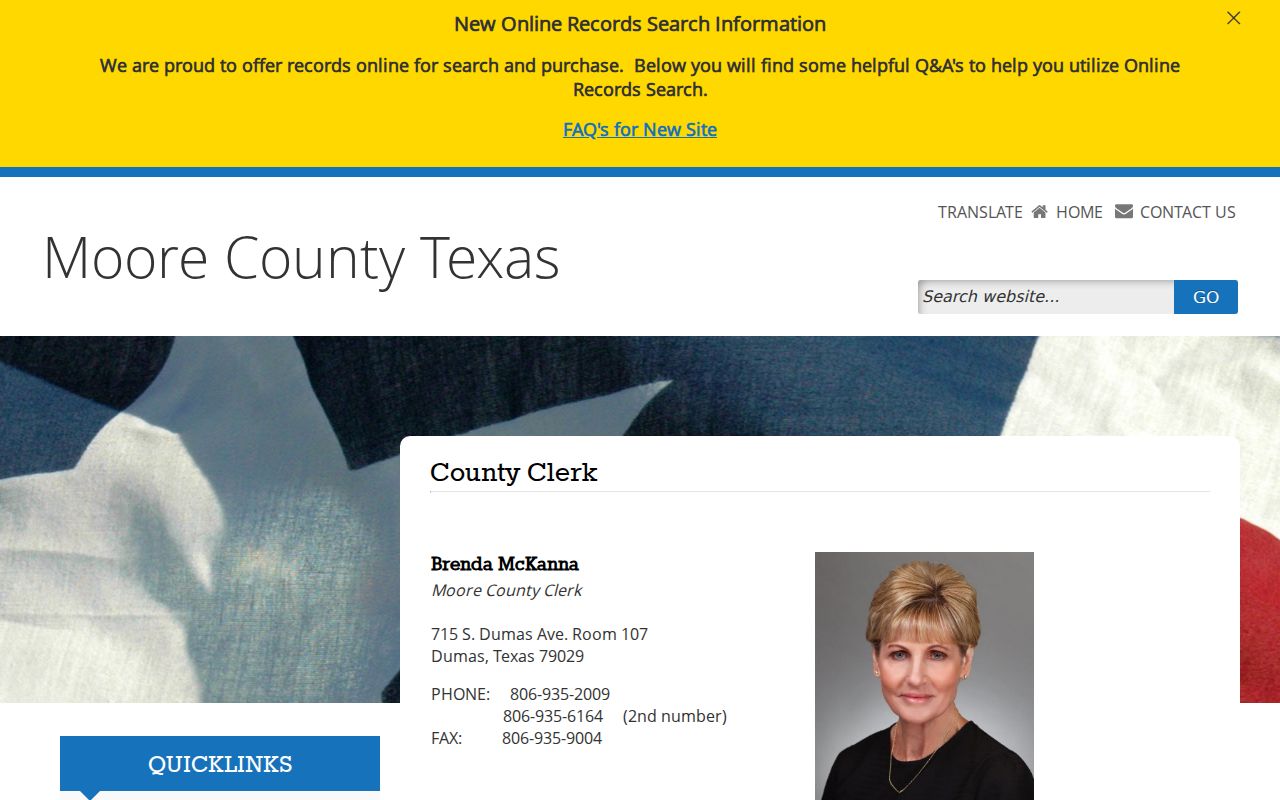
The County Clerk page links public inquiry, e-filing, and probate material.
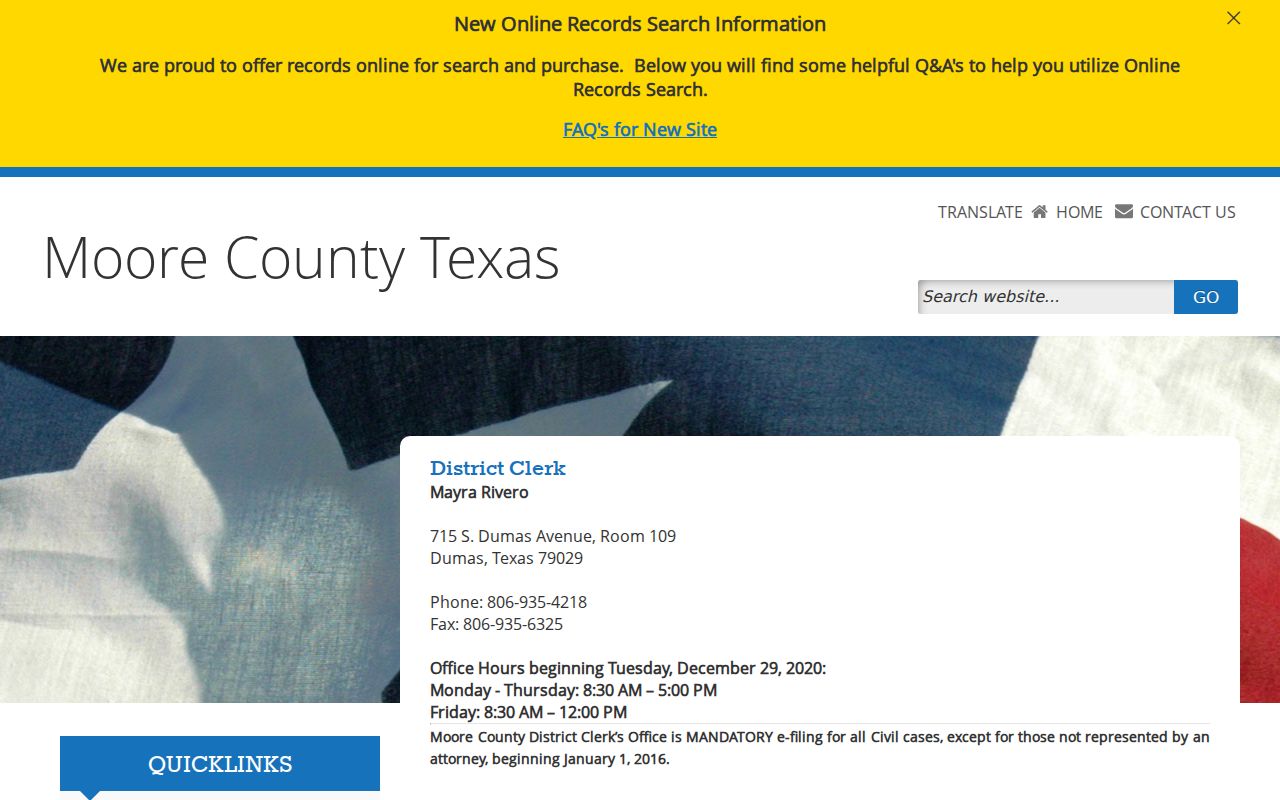
The District Clerk page publishes contacts, hours, and its new online-records notice.
Who keeps what? The County Clerk holds constitutional county, probate, and guardianship files. The District Clerk keeps district civil, family, and felony records, plus the County Court at Law family docket. For transcripts, the custodian is Court Reporter Shelly Burnett.
Court Dates and Settings in Moore County
For a reliable court date in Moore County, trust the current signed order or docket entry first. Clerk information comes next, then the coordinator or administrator. The county posts no public daily or weekly calendar feed. An old search result or a payment page should never control an appearance.
County Court at Law setting requests carry rules. State the estimated duration. Copy opposing counsel and the clerk. Follow up with a filed confirmation letter or order. No confirmation filed within ten days means the reserved time is vacated. Call 806-935-2440 for County Court at Law docket questions, or 806-935-2700 for District Court administration. The Moore County Court Schedule gathers date-focused routes.
When Moore Settings Change
A continuance is a court-approved delay. A reset puts the matter on a new date. Local County Court at Law rules demand a written, signed continuance motion with a detailed reason and the client's signature, or counsel's mailed-copy certification. If the case settles or a hearing is unneeded, report it at once.
- Setting
- A scheduled hearing, docket call, trial, or other event.
- Reset
- A move to another date, not a dismissal.
- Continuance
- A requested and court-approved delay.
- Docket call
- A session for readiness, pleas, settlements, or scheduling.
Remote appearances hinge on the current order. Confirm the link with the coordinator instead of reusing an old invitation.
Docket Access Under Texas Law
Texas court-file access is not the same as a Texas Public Information Act request to an executive agency. When you ask, name the court, cause, date range, item, and copy type. If access is denied, ask which rule, statute, or order controls.
Key rules:
Texas Rule of Judicial Administration 12 governs qualifying non-adjudicative judicial records.
Government Code §552.0035 points judiciary access to Supreme Court rules or other law.
Texas Rule of Civil Procedure 76a provides a court process for sealing records.
Family Code Chapter 58 limits juvenile-record access.
A blank result does not prove no case exists. Sealed, juvenile, protected family, redacted, expunged, nondisclosed, and offline files may need another route.
Moore County Justice Caseload
Moore County justice courts carried real volume in FY 2025, per Office of Court Administration data. Justice criminal cases pending at year end totaled 3,902, plus 1,468 justice civil cases, for a combined 5,370. Those are case categories, not unique residents.
Aggregate numbers cannot tell whether one matter was reset, paid, dismissed, or closed. For that, use the individual docket.
How the Clerk Keeps Docket Records
Ask by the exact product name. Choices include a public index, docket sheet, filed image, plain copy, certified copy, exemplified copy, or transcript. The County Clerk warns it has no general duty to run an open-ended search. Give one court, file, and item.
Moore County Clerk
715 S Dumas Avenue, Room 107
Dumas, TX 79029
806-935-2009 or 806-935-6164
Moore District Clerk
715 S Dumas Avenue, Room 109
Dumas, TX 79029
806-935-4218
Mon–Thu 8:30–5; Fri 8:30–noon
Before traveling, confirm counter hours, payment, copy cost, identification needs, and turnaround. The county publishes no public-terminal details or current certified-copy prices.
Index, Image, or Certified Copy
Each product does a different job. The LGS index locates a case. A purchased image lets you inspect an eligible filing, certification is the clerk's formal authentication, and the reporter separately produces a transcript.
| Record | Best use | Source |
|---|---|---|
| Index | Locate and track entries | LGS or clerk |
| Image | Read a public filing | Registered LGS access |
| Certified copy | Clerk-authenticated proof | Owning clerk |
| Transcript | Reporter’s proceeding record | Court reporter |
The 2026 civil and probate schedules list filing and issuance charges. They do not confirm a docket-sheet or certified-copy price.
City-by-City Court Dockets in Moore County
Moore County has three incorporated cities in the official ranking. Each municipal court keeps its own ordinance and fine-only state docket. A city ticket may never enter the County Clerk's records.
Dumas Court Records
Municipal matters start at 124 E 7th or 806-935-3158.
Cactus Court Records
nCourt searches by citation/ticket or case/cause number.
Sunray Court Records
No city-specific lookup was found; confirm municipal versus JP2.
Dumas-area JP matters go to JP1 at 119 W 5th. In Sunray, municipal and JP2 information converge around 116 E 5th, so the court name on the citation controls. Cactus offers a citation interface, but that is not a daily calendar.
Moore Court Search Fallbacks
When LGS returns no match, work through the usual suspects. Try alternate spellings, a different court or office, another record type, older file coverage, or access restrictions. If that fails, call or visit the clerk who owns the record. A written request should name the court. It should also give the cause number or case style, the date range, and the exact item. Include the copy type and how you want it delivered. The County Clerk and District Clerk web forms ask for a name, email, and reason for inquiry, with an optional phone number and a reCAPTCHA. Treat those forms as a way to open a conversation, not a certified-copy order form. Put the case facts and the product you want into the reason field. Then follow whatever instructions the clerk sends back.
re:SearchTX is a statewide second route. Access can be denied, and Moore County coverage is not promised. eFileTexas submits new filings. It will not dig up an old case. City payment vendors work court by court. The DPS Highway Patrol citation lookup gives you a court contact for qualifying tickets, not a court docket. It demands a driver license or ID number, date of birth, first name, and last name matching the license at the time of citation. Coverage stops at Highway Patrol citations from the prior 24 months. A result only tells you which court to call. It shows no plea, balance, setting history, or disposition.
Start any in-person search at the counter that holds the record. Bring the cause number if you have it, plus the court, record type, approximate filing year, and exact document name. Ask whether a public terminal is available. The county posts no details on its location, hours, help, or printing terms. Mail, phone, and web requests need plain wording. State whether you want index data, a plain copy, a certified copy, or a transcript. Ask the fee and turnaround before you send money. Older material may sit in a manual index, a bound volume, or microfilm, and Moore County publishes neither its oldest online year nor its older-file procedure.
After a hearing, records split by office. The clerk keeps the case file and docket. Court Reporter Shelly Burnett holds the reporter's transcript. DPS keeps the driver record, which is not the traffic-court file. Municipal and justice clerks keep their own local citation cases. Asking for "everything" just slows routing down. Asking for one named record gives the office enough detail to answer fast. When a public image is missing, ask whether the document is restricted, not yet digitized, or available only by direct copy request.
No online result is not a no-case finding. A wrong custodian, old file, restriction, or separate city or justice court may explain it.
Moore Municipal Search Differences
Dumas is the county seat, yet its Municipal Court sits at a separate East 7th address rather than the county courthouse. Cactus publishes the clearest city workflow. Its nCourt page lets you choose Citation/Ticket Number or Case/Cause Number, may require a letter in the number, and advises waiting five days after the citation. Sunray offers no municipal lookup. Its Municipal Court and JP2 information converge at 116 E 5th with a related phone route, so read the court label on your citation closely. A payment result is not a full docket. It may show an amount while leaving out the filed complaint, the chronological entries, the hearing setting, or the signed disposition. When the vendor page lacks the record you need, contact the city clerk for a public index or a certified outcome.
The official municipal activity totals describe aggregate court work. They say nothing about a person or an outcome. No total can tell you whether one citation was paid, dismissed, deferred, or set for trial. The court's own case record controls.
Map and Directions to the Moore County Courthouse
The 69th District Court files its civil, family, and felony criminal cases with the District Clerk at the Moore County Courthouse, 715 S Dumas Avenue, in Dumas. The building splits its counters by room: County Clerk in Room 107, District Clerk in Room 109, County Court at Law in Room 206, and District Court in Room 302. Bringing a cause number and knowing which room handles the matter saves a trip to the wrong counter.
Moore County Courthouse
715 S Dumas Avenue, Room 109
Dumas, TX 79029
806-935-4218
Mon–Thu 8:30–5; Fri 8:30–noon
No public courthouse entry, security, or parking policy is published, so calling the District Clerk or County Clerk ahead of a visit confirms current counter access and whether a public terminal is open.